
The Weekend Acting Course is designed for aspiring actors, students, creators, and working professionals who wish to develop acting skills through practical, industry-oriented training. Conducted exclusively on weekends, the programme focuses on performance techniques, character building, camera acting, and confidence development.
Duration: 3 Months | 12 Weeks
Academic Engagement:
3 Hours / Day | 2 Days / Week
Studio-based training & live productions
Paid apprenticeship & professional portfolio development
The programme aims to make professional acting training accessible and flexible while providing learners with the confidence, discipline, and performance skills required for stage, screen, and digital media
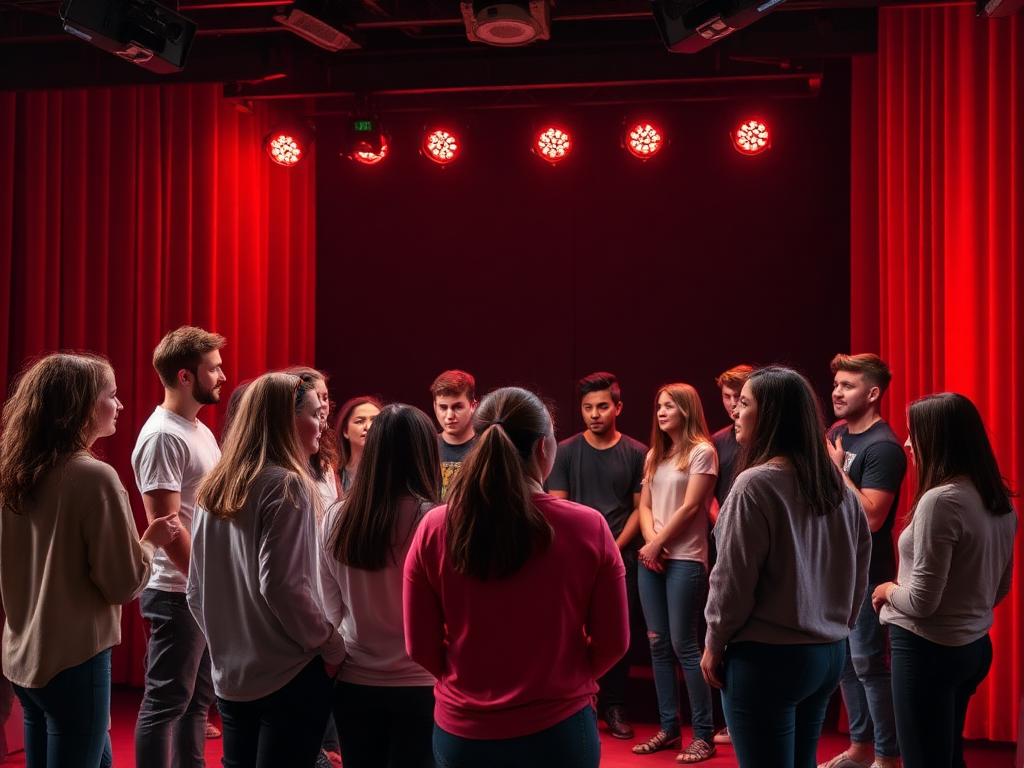
Professional acting training designed around busy schedules.
Hands-on scene work, exercises, and performance-based learning.
Understand the fundamentals of acting for film, television, OTT, and digital content.
Learn techniques and practices used by working actors and performers.

Weekend Acting Course

3 Months (12 Weeks)

₹15,000

Practical & Studio-Based
Month 1
To help students understand their body as the primary tool of performance and develop awareness, control, flexibility, and expressiveness.
Discussion: Actor's instrument, body awareness, emotions manifest, everyday movement and stage movement,Tension vs Relaxation,Physical habits and mannerisms,Body communication.
Practical Work: warm-up, Body scanning exercises, posture, Alignment and balance exercises, Walking in space, Isolation , Tempo and Leading-center , rhythm exercises , Physical storytelling .
To develop awareness of breath, voice production, articulation, and vocal expression while reinforcing the physical awareness developed in Week 1.
Revision : Body warm-up and isolation ,Alignment and posture , Walking in space , Silent character studies
Discussion: Important of Voice , Relationship between body, breath, and voice. , Difference between speaking and performing speech. , Common vocal habits and limitations, Clarity versus loudness , Articulation and diction , The importance of language in performance
Practical Work: Breath support and awareness exercises , Diaphragmatic breathing, Humming and resonance exercises, Vocal warm-ups, Jaw, tongue, lip, Projection exercises, Tongue twisters, Resonance work, Reading prose and poetry aloud
To help students apply body and voice techniques learned in previous weeks while developing spontaneity, imagination, listening skills, and stage co1nfidence.
Revision : Body awareness and movement exercises , Alignment and posture , Breath control and voice warm-ups , Articulation and projection exercises
Discussion: What is improvisation? , Why is improvisation important for actors? , The difference between planning and responding , Trust, acceptance, and presence on stage.
Practical Work: "Yes, And..." exercises, Word association games, Status and relationship exercises, Movement-based improvisations, Vocal improvisations using sounds and emotions
To strengthen improvisational skills by introducing character, conflict, relationships, and storytelling through body and voice.
Revision : Body movement exercises, Voice and speech exercises, Basic improvisation principles, Listening and responding exercises
Discussion: Creating character through physicality, Creating character through voice, Understanding objectives and conflict, Storytelling without a script.
Practical Work: Character walks, Voice transformation exercises, Improvised scenes with given circumstances, Emotion and status improvisations, Character-to-character interactions






Starting point
Passion for acting or performance
Raw emotional expression
Limited understanding of staging, direction or production
Industry Ready
Professionally trained actor–director
Strong foundation in acting, writing, direction and production
Ability to lead rehearsals, performances and creative teams
Portfolio across stage, screen, digital and immersive media
Enquire now to know more about admissions, eligibility and upcoming academic sessions.